

Irvine has long been viewed as one of America’s premier master-planned cities, financially disciplined, carefully managed, and nationally recognized for stability. In 2021, it ranked among the most fiscally healthy cities in the nation. That reputation now rests on a simple question: who was watching the checkbook?
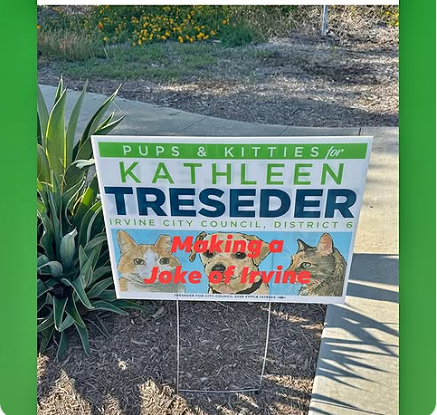
City Manager Oliver Chi built and executed the budgets driving Irvine toward a projected $6 million overspend this fiscal year, with deficits potentially reaching $47 million annually by 2030. Every one of those budgets crossed the City Council for approval, Councilmember Kathleen Treseder included. Council sign-off is supposed to be the check on executive spending. Increasingly, it looks like a formality.
What Treseder approved, year after year
Irvine’s May 5, 2026 Mid-Cycle Budget & Fiscal Update laid out the trajectory in the City’s own words: a $6 million deficit for FY 2025-26, $9 million for FY 2026-27, then $37 million, $44 million, and $47 million in the three years after that. None of this was hidden. It was in the documents Treseder and her Council colleagues reviewed and passed. The same materials disclose that the City has leaned on one-time funding to paper over budget gaps since 2017, nearly a decade of Council votes approving spending plans that didn’t structurally balance.
A local budget watchdog said, “It’s not surprising that Treseder, who has never run a business and had no previous City experience, was unable to question Chi on his spending recommendations.”
The spending Treseder voted through
Since 2020, full-time staffing under Chi’s administration grew from 856 employees to more than 1,100, a nearly 30 percent increase. Personnel costs rose from about $139 million to more than $211 million, up 50 percent in five years. Each budget carrying those increases needed Council approval to take effect, and Treseder’s vote was part of that approval each time.
The real issue
Irvine’s reserves ($135 million) and general fund (nearing $300 million) still look strong on paper. But reserves buy time, not accountability. The question isn’t whether Chi proposed aggressive spending. City managers often do. It’s whether Treseder provided real scrutiny as a Councilmember or simply approved what landed on the agenda.


Leave a Reply